
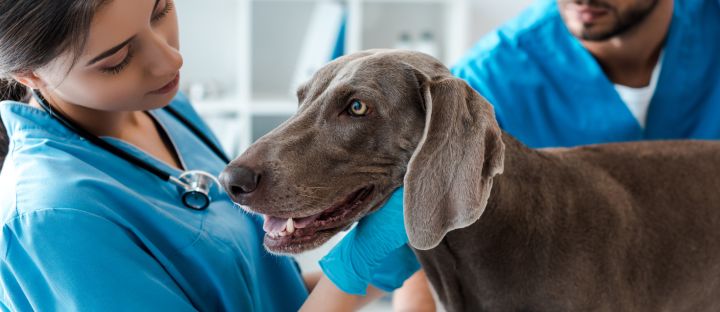
Bloat, also known as Gastric Dilatation-Volvulus (GDV), is a sudden and life-threatening condition that can affect any dog, but it is particularly common in deep-chested breeds like Weimaraners. Understanding the signs and risk factors is crucial for any Weimaraner owner.
If you suspect your dog is experiencing bloat, contact your veterinarian or an emergency animal hospital immediately. This is a medical emergency where every second counts.
What Are the Signs of Bloat?
A dog with bloat may show one or more of the following symptoms. They can come on very quickly:
- A swollen, hard abdomen
- Retching or trying to vomit without success
- Excessive drooling or salivation
- Restlessness, pacing, or inability to get comfortable
- Signs of pain, such as whining or groaning, especially if you press on their belly
Key Risk Factors for Weimaraners
While the exact cause of bloat is unknown, several factors can increase a Weimaraner’s risk.
How Can Bloat Be Prevented?
While no prevention method is foolproof, these strategies can help reduce your dog’s risk:
- Feed two or more smaller meals per day instead of one large one.
- Use a slow-feeder bowl to prevent your dog from eating too fast.
- Avoid strenuous exercise for an hour before and after meals.
- If you have multiple dogs, feed them separately to reduce stress and competition over food.
- Talk to your veterinarian about a preventative surgery called a prophylactic gastropexy, which can tack the stomach to the abdominal wall. This is often done at the same time as a spay or neuter surgery.
The information on this page is a summary intended for educational purposes and is not a substitute for professional veterinary advice. We are grateful to the American Kennel Club for providing comprehensive information on this topic.